

¿Cómo elegir el revestimiento exterior de WPC adecuado para proyectos mayoristas?


Autor
Con años de experiencia en materiales de construcción para exteriores, me especializo en tecnologías avanzadas de compuestos de madera y plástico (WPC). Mi objetivo es ayudar a arquitectos, contratistas y gerentes de proyecto a comprender las complejidades de las soluciones modernas para terrazas. Al conectar la ingeniería estructural con el diseño sostenible, comparto conocimientos prácticos para garantizar que sus proyectos exteriores alcancen la máxima durabilidad y el mejor retorno de la inversión posible.
Marie R. Winters


Seleccionar el revestimiento exterior de WPC adecuado ya no se trata solo de apariencia. Para distribuidores, importadores, constructores y contratistas de proyectos, cada decisión de compra afecta directamente la eficiencia de la instalación, los costos de mantenimiento, la satisfacción del cliente y la rentabilidad a largo plazo. Como líder del sector, Proveedor mayorista de revestimientos de WPC, Entendemos que elegir el producto equivocado puede dar lugar a reclamaciones de garantía, retrasos en los proyectos o costosos reemplazos.
La demanda mundial de revestimientos de composite de madera y plástico (WPC) ha crecido de forma constante durante la última década, a medida que los arquitectos buscan alternativas de bajo mantenimiento a la madera natural. Edificios comerciales, hoteles, urbanizaciones residenciales, escuelas y proyectos municipales especifican cada vez más revestimientos compuestos, ya que combinan la apariencia de la madera con una mayor estabilidad dimensional y resistencia a la intemperie. Sin embargo, no todos los paneles de WPC se comportan igual de bien en diferentes climas o aplicaciones.
Esta guía explica cómo los compradores profesionales evalúan los revestimientos de WPC antes de realizar pedidos al por mayor. En lugar de centrarnos únicamente en el precio, analizaremos el diseño estructural, la composición del material, la tecnología de la superficie, la eficiencia de la instalación y las capacidades del proveedor; factores que influyen mucho más en el coste total de propiedad.
Comprenda los requisitos de su proyecto antes de comparar productos.
Uno de los errores más comunes al comprar es comparar productos antes de definir los requisitos del proyecto. Un panel de pared diseñado para un hotel de lujo puede resultar innecesario para un almacén, mientras que los paneles de gama económica pueden no satisfacer a los arquitectos que trabajan en proyectos residenciales de alta gama.
Los compradores profesionales suelen comenzar respondiendo a varias preguntas:
| Requisitos del proyecto | Preguntas a considerar |
|---|---|
| Solicitud | ¿Vivienda residencial, edificio comercial, hotel, villa, oficina o instalación pública? |
| Clima | ¿Alta exposición a los rayos UV, entorno costero, fuertes lluvias o temperaturas bajo cero? |
| Estilo de diseño | ¿Aspecto moderno de madera natural, arquitectura minimalista o tradicional? |
| Vida útil prevista | ¿10 años, 20 años o más de 25 años? |
| Expectativas de mantenimiento | ¿Acepta el mantenimiento anual o prefiere que no requiera mantenimiento? |
Una vez que se tienen claros estos factores, seleccionar el perfil de panel adecuado resulta mucho más sencillo. Muchos compradores mayoristas también estandarizan las dimensiones de los paneles en varios proyectos para simplificar la gestión del inventario y reducir la necesidad de capacitación para la instalación.
Por qué la composición del material importa más que el precio.
Aunque muchos proveedores anuncian productos de apariencia similar, la composición interna del revestimiento de WPC puede variar significativamente. Los fabricantes de alta calidad logran un equilibrio preciso entre la fibra de madera, el HDPE, los estabilizadores, los agentes de acoplamiento, los inhibidores de rayos UV, los pigmentos y los aditivos de procesamiento. Pequeñas diferencias en la formulación suelen determinar si los paneles conservan su aspecto tras años de exposición a la intemperie.
Las formulaciones premium típicas contienen aproximadamente entre un 55 % y un 60 % de fibra de madera, entre un 30 % y un 35 % de polietileno de alta densidad (HDPE) y entre un 8 % y un 10 % de aditivos funcionales. El HDPE virgen generalmente ofrece mayor durabilidad y consistencia que los plásticos reciclados utilizados en alternativas de menor costo.
| Factor material | Impacto en el rendimiento |
|---|---|
| HDPE virgen | Mejora la estabilidad dimensional y la resistencia a la intemperie. |
| Calidad de la fibra de madera | Afecta a la resistencia, la apariencia y la consistencia del mecanizado. |
| Estabilizadores UV | Reduce la decoloración causada por la exposición prolongada a la luz solar. |
| Agentes de acoplamiento | Mejora la unión entre la fibra de madera y el plástico. |
| Pigmentos de color | Mejora la retención del color a largo plazo. |
En lugar de solicitar únicamente un presupuesto, los importadores experimentados suelen pedir a los proveedores especificaciones de los materiales, informes de laboratorio, datos de envejecimiento por rayos UV y resultados de pruebas de absorción de agua. Estos documentos ofrecen una visión mucho más clara de la calidad del producto que su mera apariencia.
Elija la tecnología de superficie adecuada.
La tecnología de superficie se ha convertido en uno de los principales factores diferenciadores en el mercado actual de revestimientos compuestos. Las generaciones anteriores de productos WPC se centraban principalmente en sustituir la madera, mientras que se espera que los productos modernos reproduzcan texturas de madera realistas y mantengan su aspecto durante muchos años con un mantenimiento mínimo.
Actualmente, los compradores mayoristas suelen comparar tres opciones de superficie principales:
| Acabado superficial | Ventajas | Aplicaciones recomendadas |
|---|---|---|
| Cepillado | Textura natural con mayor resistencia al deslizamiento. | Edificios comerciales y proyectos públicos |
| Veta de madera en relieve | Aspecto de madera realista | Urbanizaciones residenciales y villas |
| Superficie coextruida | Resistencia superior a las manchas, la humedad y los rayos UV. | Entornos comerciales y costeros de alta gama |
Para proyectos que priorizan la durabilidad y la estética, muchos promotores ahora especifican revestimientos de pared impermeables con vetas de madera, ya que proporcionan la calidez de la madera natural al tiempo que eliminan la necesidad de pintar o sellar con frecuencia.
Por ejemplo, este Revestimiento de pared de madera WPC impermeable Combina un perfil hueco diseñado con una veta de madera en relieve de aspecto realista, lo que lo hace adecuado para fachadas residenciales, edificios comerciales, locales comerciales y proyectos arquitectónicos modernos donde la apariencia y la durabilidad son igualmente importantes.
Evalúe la estructura del panel en lugar de fijarse únicamente en el grosor.
Muchos compradores asumen que los paneles más gruesos siempre son más resistentes. En realidad, el diseño estructural suele influir más en el rendimiento que el grosor total. La distribución interna de las nervaduras, la geometría de las cámaras, el grosor de las paredes y la disposición del refuerzo influyen en la rigidez, la dilatación térmica y la estabilidad de la instalación.
Un perfil hueco diseñado adecuadamente puede reducir el consumo de material manteniendo una excelente rigidez estructural. Esto también disminuye los costos de transporte, ya que se puede cargar más metro cuadrado en cada contenedor sin comprometer el rendimiento del producto.
Al evaluar las muestras, solicite dibujos de secciones transversales en lugar de basarse únicamente en fotografías del producto. El análisis de secciones transversales revela la uniformidad con la que se distribuye la tensión en el panel y si el perfil se ha optimizado para un uso prolongado en exteriores.
| Elemento de evaluación | Por qué es importante |
|---|---|
| Diseño de cámara interna | Determina la rigidez y la eficiencia del peso. |
| Espesor de pared | Afecta a la resistencia al impacto y a la fuerza de sujeción del tornillo. |
| Diseño de juntas de expansión | Permite el movimiento durante los cambios de temperatura estacionales. |
| Sistema de conexión | Mejora la velocidad y la apariencia de la instalación. |
Los compradores que adquieran paneles de pared de WPC coextruidos también deberían comparar el rendimiento de las diferentes estructuras de perfil bajo cargas de viento e instalaciones de grandes luces, especialmente en fachadas comerciales donde la integridad estructural es un requisito de diseño clave.
Compara datos de rendimiento en lugar de afirmaciones de marketing.
Los folletos de productos suelen describir el revestimiento de WPC como "resistente a la intemperie" o "libre de mantenimiento", pero los compradores experimentados confían en datos de rendimiento medibles en lugar de en la publicidad. Las pruebas de laboratorio proporcionan evidencia objetiva del rendimiento de un producto tras años de exposición a la intemperie.
Al solicitar presupuestos a varios proveedores, pida a cada fabricante que proporcione informes técnicos comparables. Esto facilita enormemente la evaluación de los productos utilizando estándares uniformes en lugar de descripciones subjetivas.
| Indicador de rendimiento | Valor recomendado | Importancia |
|---|---|---|
| Absorción de agua | <1% | Reduce la hinchazón y la deformación. |
| Resistencia a los rayos UV | Escala de grises de grado 4 o superior | Mejora la estabilidad del color a largo plazo. |
| Vida de servicio | 20–25+ años | Reduce los costos de reemplazo |
| Temperatura de funcionamiento | -40°C a 60°C | Adecuado para diferentes climas |
| Resistencia al impacto | No se observan grietas en las pruebas estándar. | Mejora la durabilidad durante el transporte y la instalación. |
Actualmente, muchos desarrolladores comerciales evalúan los productos en función de su rendimiento durante todo su ciclo de vida, en lugar de basarse únicamente en el precio de compra. Aunque un panel de alta gama tenga un coste inicial ligeramente superior, una mayor vida útil y un menor mantenimiento pueden reducir significativamente los costes totales del proyecto.
Elija dimensiones que mejoren la eficiencia de la instalación.
Las dimensiones de los paneles influyen en algo más que la estética. El ancho, el grosor y la longitud afectan a la velocidad de instalación, la tasa de desperdicio, la eficiencia del transporte y los costes laborales.
Para los compradores mayoristas que abastecen múltiples proyectos de construcción, seleccionar dimensiones estandarizadas simplifica la gestión del almacén y reduce la complejidad del inventario. Muchos contratistas también prefieren paneles más largos porque reducen las juntas visibles en grandes fachadas.
| Dimensión | Beneficio |
|---|---|
| Longitudes estándar | Menor tiempo de entrega de producción |
| Longitudes personalizadas | Reducir los residuos de corte en obra. |
| Perfiles amplios | Instalación más rápida por metro cuadrado |
| Perfiles huecos ligeros | Menores costos de transporte |
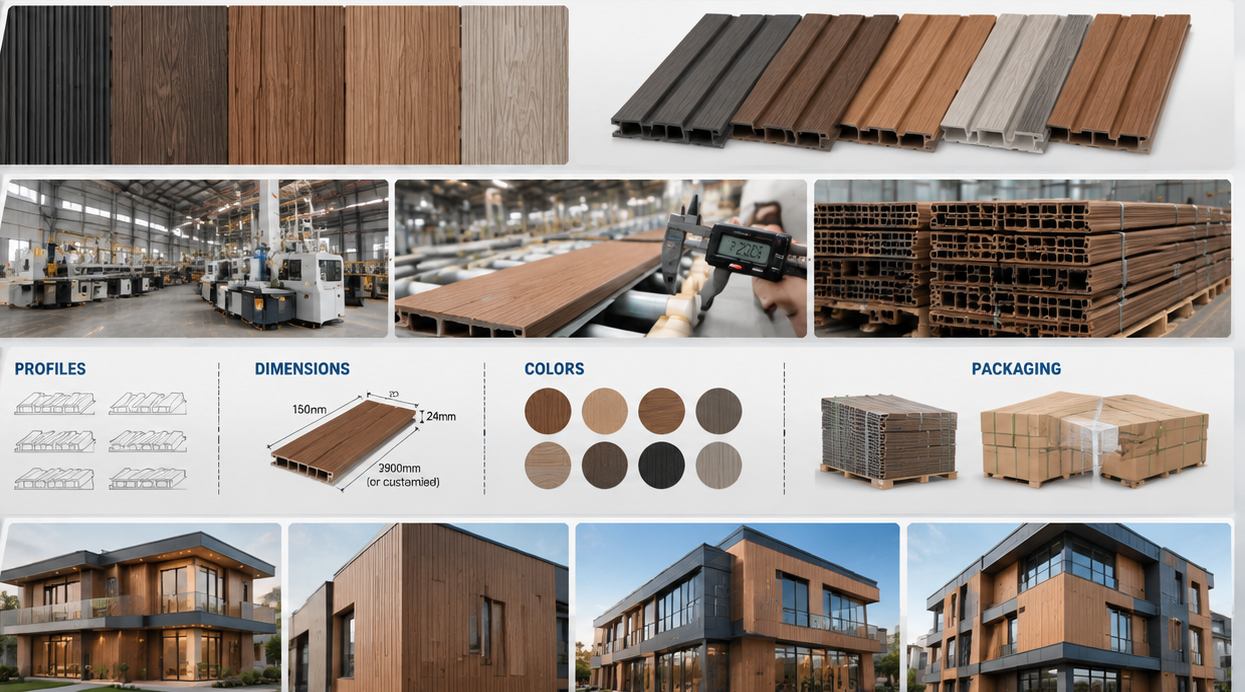
El popular perfil de 26 × 219 mm es muy utilizado porque ofrece un excelente equilibrio entre rigidez estructural, facilidad de instalación y una estética arquitectónica moderna. Para los distribuidores que atienden simultáneamente a los mercados residencial y comercial, este perfil suele cubrir una amplia gama de necesidades de los clientes.
Verifique el fabricante, no solo el producto.
Un producto de alta calidad es solo una parte de una colaboración mayorista exitosa. La capacidad de producción constante, los sistemas de control de calidad, el soporte técnico y el servicio posventa son igualmente importantes, especialmente para los pedidos recurrentes.
En lugar de limitarse a preguntar por los precios, los importadores profesionales suelen investigar las capacidades de fabricación del proveedor.
| Evaluación de proveedores | Preguntas para hacer |
|---|---|
| Capacidad de producción | ¿Cuántos contenedores se pueden entregar cada mes? |
| Control de calidad | ¿Se inspeccionan las materias primas y los productos terminados? |
| Servicio OEM | ¿Se pueden proporcionar colores, perfiles y embalajes personalizados? |
| Soporte de ingeniería | ¿Hay planos de instalación disponibles? |
| Experiencia en exportación | ¿A qué mercados extranjeros se les ha abastecido? |
Los fabricantes con experiencia también pueden recomendar la selección de perfiles según el clima local, las normativas de construcción y las prácticas de instalación. Este apoyo técnico suele prevenir problemas costosos antes de que comience la construcción.
No ignores las certificaciones y el cumplimiento normativo.
Las normativas de construcción varían entre países, y las especificaciones del proyecto suelen requerir documentación justificativa antes de la aprobación de los materiales. Verificar las certificaciones al inicio del proceso de compra ayuda a evitar retrasos en la aduana e interrupciones en el proyecto.
| Proceso de dar un título | Objetivo |
|---|---|
| ISO 9001 | sistema de gestión de calidad |
| CE | Cumplimiento de las normativas del mercado europeo cuando corresponda. |
| Informes de pruebas de SGS | Verificación independiente del producto |
| Informes de comportamiento ante el fuego | Requerido para muchos proyectos comerciales |
| Informes medioambientales | Apoyar los requisitos de construcción sostenible |
Si sus clientes están relacionados con infraestructuras públicas, hoteles, edificios educativos o proyectos comerciales, los documentos de certificación pueden llegar a ser tan importantes como los precios competitivos.
Evaluar el costo total de propiedad
Muchas decisiones de compra se centran exclusivamente en el precio de fábrica por metro cuadrado. Sin embargo, los distribuidores experimentados comprenden que el transporte, la eficiencia de la instalación, el mantenimiento, las reclamaciones de garantía y la frecuencia de reemplazo contribuyen al costo real de propiedad.
| Categoría de costo | Madera natural | Revestimiento de WPC de calidad |
|---|---|---|
| Costo inicial de los materiales | Medio | De medio a alto |
| Pintura y sellado | Requerido | No es obligatorio |
| Mantenimiento anual | Alto | Muy bajo |
| Vida útil prevista | 10-15 años | 20–25+ años |
| Frecuencia de reemplazo | Más alto | Más bajo |
En un período de veinte años, los ahorros en mantenimiento por sí solos pueden compensar el mayor precio de compra del revestimiento compuesto de alta gama. Esta es una de las razones principales por las que los promotores inmobiliarios especifican cada vez más este tipo de revestimiento. Revestimiento de paredes exteriores comerciales Fabricado con WPC en lugar de madera tradicional.
Errores comunes que los compradores mayoristas deben evitar
| Error | Mejores prácticas |
|---|---|
| Elegir la cotización más baja | Compare las especificaciones y el rendimiento a largo plazo. |
| Ignorar los accesorios de instalación | Pida juntos los clips, los embellecedores y los sujetadores. |
| Pedidos sin muestras | Aprobar las muestras físicas antes de la producción en masa. |
| Ignorar el plazo de entrega | Confirme el cronograma de producción antes de firmar los contratos. |
| No revisar el embalaje | Asegúrese de que el embalaje de exportación proteja los productos durante el envío. |
Otro error común es comprar basándose únicamente en fotografías. Solicite siempre las especificaciones técnicas completas, los planos de sección transversal y los manuales de instalación. Si es posible, visite la fábrica o contrate una inspección externa antes de realizar pedidos de grandes cantidades.
Lista de verificación para compradores mayoristas antes de realizar un pedido
| Lista de verificación | Terminado |
|---|---|
| Muestras de productos aprobadas | □ |
| Composición del material verificada | □ |
| Informes de pruebas de laboratorio revisados | □ |
| Consistencia de color confirmada | □ |
| Accesorios y embellecedores verificados | □ |
| Cantidad de carga de contenedor confirmada | □ |
| Términos de garantía revisados | □ |
| Plazo de entrega de producción confirmado | □ |
Preguntas frecuentes
¿Es adecuado el revestimiento exterior de paredes de WPC para proyectos costeros?
Sí. El revestimiento de WPC coextruido de alta calidad ofrece una excelente resistencia a la humedad, la niebla salina y la exposición a los rayos UV, lo que lo convierte en una opción práctica para muchos entornos costeros.
¿Se pueden personalizar los colores y las longitudes para los pedidos al por mayor?
La mayoría de los fabricantes admiten la producción OEM, incluyendo colores, longitudes, texturas de superficie, embalaje y marca personalizados, siempre que se cumplan las cantidades mínimas de pedido.
¿Cómo pueden los compradores reducir los costes de instalación?
Seleccionar perfiles estandarizados, pedir accesorios a juego y utilizar paneles diseñados con sistemas de fijación ocultos puede mejorar significativamente la eficiencia de la instalación y, al mismo tiempo, reducir el tiempo de mano de obra.
El éxito en las compras al por mayor rara vez se determina únicamente por el precio unitario. Los compradores que evalúan cuidadosamente la calidad del material, el diseño estructural, el rendimiento técnico, las capacidades del proveedor y los costos de mantenimiento a largo plazo tienen más probabilidades de lograr resultados consistentes en el proyecto. Como profesional Fabricante de revestimientos de WPCRecomendamos adoptar un enfoque integral antes de realizar un pedido para ayudar a reducir el riesgo, mejorar la rentabilidad y construir relaciones duraderas a lo largo de toda la cadena de suministro.
- Cómo el revestimiento de pared de WPC estriado realza los exteriores comerciales y residenciales
- ¿Por qué el WPC es el mejor material para casas costeras y terrazas junto a la piscina?
- Análisis del costo del ciclo de vida de las tarimas de WPC: precio inicial, instalación, mantenimiento y valor a largo plazo.
- Cómo instalar tarimas de WPC para proyectos exteriores: Guía paso a paso
- Paneles de pared WPC para proyectos de interior y exterior: tipos, ventajas, aplicaciones y guía de compra.
- Tarimas de WPC coextruidas: Beneficios, rendimiento, coste y guía de compra B2B.
- Ideas modernas de diseño de vallas de WPC para privacidad y proyectos al aire libre.
- ¿Cómo elegir una valla de WPC impermeable para proyectos al aire libre?