

Paneles de pared de WPC frente a madera tradicional: ¿Qué material ofrece un mejor rendimiento?

Autor
Con años de experiencia en materiales de construcción para exteriores, me especializo en tecnologías avanzadas de compuestos de madera y plástico (WPC). Mi objetivo es ayudar a arquitectos, contratistas y gerentes de proyecto a comprender las complejidades de las soluciones modernas para terrazas. Al conectar la ingeniería estructural con el diseño sostenible, comparto conocimientos prácticos para garantizar que sus proyectos exteriores alcancen la máxima durabilidad y el mejor retorno de la inversión posible.
Marie R. Winters


Cuando los propietarios, arquitectos y diseñadores de interiores eligen materiales para el revestimiento de paredes, la decisión suele reducirse a dos opciones populares: paneles de pared de WPC y madera tradicional. La madera se ha utilizado durante siglos por su aspecto natural y su carácter atemporal. Sin embargo, las exigencias de la construcción moderna demandan materiales que ofrezcan mayor durabilidad, un mantenimiento más sencillo y una mejor resistencia a las inclemencias del tiempo.
Los paneles de pared de WPC (compuesto de madera y plástico) se han consolidado como una solución alternativa al combinar fibras de madera con tecnología de polímeros. Esta estructura híbrida ofrece la calidez visual de la madera, a la vez que soluciona muchas de las deficiencias de la madera natural. Pero, ¿realmente el WPC supera a la madera tradicional? Esta comparativa detallada analiza la durabilidad, el coste, la instalación, el desempeño ambiental, el mantenimiento y el valor a largo plazo.
Comprender la diferencia entre WPC y madera tradicional
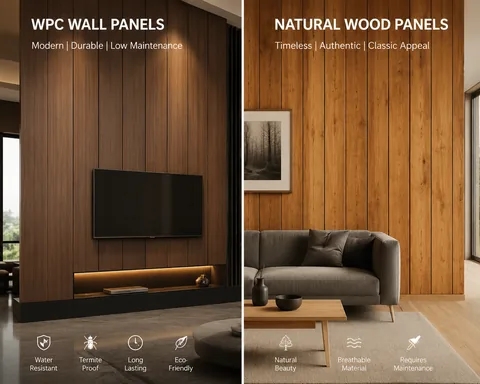
La madera tradicional es un material natural que se obtiene de árboles como el roble, el pino, el cedro y el nogal. Sus vetas únicas y su textura natural la hacen atractiva para aplicaciones tanto en interiores como en exteriores. Sin embargo, al ser un material orgánico, la madera reacciona fuertemente a la humedad, los cambios de temperatura, los insectos y la exposición a los rayos UV.
Los paneles de pared WPC son productos de ingeniería fabricados con aproximadamente un 50-70% de fibra de madera combinada con un 30-50% de termoplásticos y aditivos. El proceso de fabricación crea una estructura compuesta densa que reduce la absorción de agua y mejora la estabilidad dimensional. Para contratistas, distribuidores y empresas de construcción que buscan soluciones confiables a granel, elegir un Proveedor mayorista de paneles de pared WPC Puede contribuir a garantizar una calidad de producto constante, precios estables y soporte a largo plazo para los proyectos.
| Característica del material | Paneles de pared de WPC | Madera tradicional |
|---|---|---|
| Composición principal | Fibras de madera + resina polimérica + estabilizadores | Madera natural |
| Absorción de agua | Generalmente por debajo del 3% | Puede superar el 20% dependiendo de la especie. |
| Requisitos de mantenimiento | Bajo mantenimiento | Se requiere sellado, pintura o barnizado regular. |
| Vida útil promedio | 20-30 años con una instalación adecuada | De 10 a 50 años, dependiendo del mantenimiento y del tipo de madera. |
Comparativa de durabilidad: ¿Qué material dura más?
La durabilidad es uno de los factores más importantes a la hora de seleccionar materiales para las paredes. La madera natural se comporta bien en ambientes interiores controlados, pero se vuelve vulnerable cuando se expone a la humedad, la lluvia o las fluctuaciones de temperatura.
Los paneles de pared de WPC están diseñados específicamente para superar estas limitaciones. El componente polimérico crea una barrera protectora que impide la penetración excesiva de humedad. Esto hace que el WPC sea adecuado para áreas como baños, balcones, cocinas, espacios comerciales y edificios costeros.
Para proyectos que requieren estabilidad a largo plazo, muchos contratistas eligen Paneles de pared interiores de WPC duraderos porque mantienen su forma y apariencia ante las cambiantes condiciones ambientales.
| Factor de rendimiento | Paneles de pared de WPC | Madera tradicional |
|---|---|---|
| Resistencia a la humedad | Excelente; resistente a la hinchazón y la deformación. | De leve a moderado; depende del tratamiento. |
| Resistencia a las termitas | Alta resistencia | Requiere protección química |
| Riesgo de agrietamiento | Bajo | Mayor debido a la expansión y contracción naturales. |
| Estabilidad del color | Compatible con aditivos UV | Puede decolorarse sin recubrimiento protector. |
Requisitos de mantenimiento y costes a largo plazo
El precio de compra inicial es solo una parte de la inversión total. Los costos de mantenimiento suelen determinar el valor real de un material de pared a lo largo de su vida útil.
La madera tradicional suele requerir lijado, barnizado, pintura y tratamiento impermeabilizante periódicos. Según estudios sobre el mantenimiento de edificios, las superficies exteriores de madera a menudo requieren un tratamiento protector cada 2 a 5 años, dependiendo de las condiciones climáticas.
Los paneles WPC requieren mucho menos mantenimiento. Generalmente, basta con una limpieza regular con agua y detergente suave. No es necesario repintarlos ni sellarlos con productos químicos con frecuencia, lo que reduce tanto los costos de mano de obra como los de materiales.
| Categoría de costo | Paneles de pared de WPC | Madera tradicional |
|---|---|---|
| Costo de instalación | Moderado | De moderado a alto |
| Mantenimiento anual | Muy bajo | De medio a alto |
| Frecuencia de reparación | Extraño | Más frecuente en climas húmedos |
| Costo de propiedad a 10 años | Generalmente más bajo | Más alto debido al mantenimiento |
Flexibilidad en apariencia y diseño
Una de las razones por las que la madera tradicional sigue siendo popular es su auténtica belleza natural. Cada tabla de madera tiene vetas, colores y texturas únicas que crean un efecto visual excepcional.
La tecnología moderna de WPC ha mejorado significativamente la calidad estética. Las técnicas avanzadas de grabado y tratamiento de superficies permiten reproducir texturas de madera realistas, ofreciendo además más opciones de diseño que la madera natural.
Para interiores contemporáneos, productos como Paneles WPC con vetas de madera modernas Proporcionar a los diseñadores patrones uniformes, múltiples colores y una combinación más sencilla entre diferentes espacios.
| Aspecto de diseño | Paneles WPC | Madera natural |
|---|---|---|
| Opciones de textura | Amplia variedad de acabados que imitan la madera. | Limitado por la disponibilidad de especies naturales |
| Selección de color | Muchas opciones personalizables | Tonos mayoritariamente naturales |
| Consistencia de patrones | Altamente consistente | Cada pieza es diferente |
Impacto ambiental: ¿Qué material es más sostenible?
La sostenibilidad se ha convertido en un factor importante en la construcción moderna. La madera tradicional es renovable cuando proviene de bosques gestionados de forma responsable, pero la tala excesiva puede contribuir a la deforestación.
Los productos de WPC suelen utilizar materiales plásticos reciclados y residuos de madera, lo que reduce la demanda de recursos vírgenes. Muchos fabricantes también producen paneles de WPC reciclables al final de su vida útil.
| Factor ambiental | WPC | Madera tradicional |
|---|---|---|
| Uso de recursos | Utiliza materiales reciclados en muchos casos. | Requiere la tala de árboles. |
| Reducción de residuos | Se pueden utilizar los residuos del procesamiento de la madera. | Más residuos de corte durante la instalación |
| Reciclabilidad | Posible dependiendo de la composición | Biodegradable pero no siempre reutilizable. |
Comparación de procesos de instalación
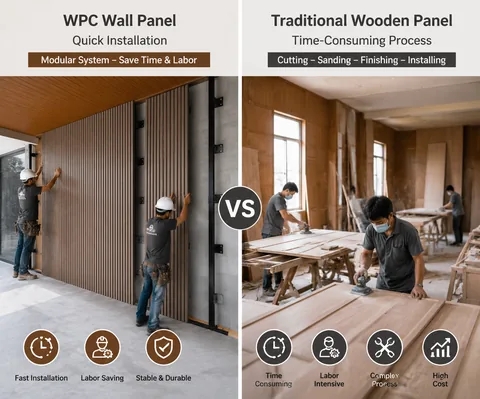
La eficiencia en la instalación afecta directamente los plazos del proyecto y los costos laborales. La instalación tradicional de madera requiere una medición, corte, acabado y protección de la superficie precisos.
Los paneles de pared de WPC suelen tener estructuras ligeras y sistemas de encaje. Esto permite una instalación más rápida con menos herramientas especializadas. En proyectos comerciales donde la rapidez de la construcción es crucial, el WPC puede reducir significativamente el tiempo de instalación.
| Factor de instalación | Paneles de pared de WPC | Madera tradicional |
|---|---|---|
| Velocidad de instalación | Rápido gracias a su diseño modular. | Más lento debido a los trabajos de preparación. |
| Requisitos de habilidades | Más bajo | Se requiere mayor destreza artesanal. |
| Residuos en el lugar | Mínimo | Mayor desperdicio de corte |
¿En qué casos conviene elegir WPC en lugar de madera?
Si bien el WPC ofrece muchas ventajas, la mejor opción depende del entorno del proyecto. La madera tradicional sigue siendo una excelente opción para interiores de lujo donde la autenticidad de los materiales naturales es primordial.
Sin embargo, el WPC suele ser la mejor opción para lugares expuestos a la humedad, variaciones de temperatura o uso intensivo. Las aplicaciones comunes incluyen:
- Paredes decorativas residenciales
- Hoteles y restaurantes
- Interiores de oficinas
- Decoración de paredes de baños y cocinas
- Áreas exteriores cubiertas
- Proyectos de renovación comercial
Para aplicaciones exteriores donde la resistencia a la intemperie es fundamental, muchos constructores prefieren el revestimiento de paredes de WPC resistente a la intemperie porque proporciona una mejor protección contra la humedad, la exposición a la lluvia y los cambios diarios de temperatura.
Cómo elegir el material de pared adecuado para su proyecto
La elección entre WPC y madera tradicional depende de tus prioridades. Si buscas una estética completamente natural para un espacio interior de alta gama, la madera sigue siendo una excelente opción. Sin embargo, si necesitas un material que combine apariencia, durabilidad, bajo mantenimiento y resistencia a las inclemencias del tiempo, los paneles de pared de WPC ofrecen una solución más práctica.
A medida que la tecnología de la construcción continúa desarrollándose, los materiales compuestos se vuelven cada vez más comunes en el diseño residencial y comercial. Para muchos proyectos modernos, el equilibrio entre rendimiento y estética convierte al WPC en una alternativa atractiva a la madera tradicional.
- Cómo el revestimiento de pared de WPC estriado realza los exteriores comerciales y residenciales
- ¿Por qué el WPC es el mejor material para casas costeras y terrazas junto a la piscina?
- Análisis del costo del ciclo de vida de las tarimas de WPC: precio inicial, instalación, mantenimiento y valor a largo plazo.
- Cómo instalar tarimas de WPC para proyectos exteriores: Guía paso a paso
- Paneles de pared WPC para proyectos de interior y exterior: tipos, ventajas, aplicaciones y guía de compra.
- Tarimas de WPC coextruidas: Beneficios, rendimiento, coste y guía de compra B2B.
- Ideas modernas de diseño de vallas de WPC para privacidad y proyectos al aire libre.
- ¿Cómo elegir una valla de WPC impermeable para proyectos al aire libre?